Hi, and welcome to my blog. It occured to me that when you view the images in my galleries, that you would like have some idea as to the how, when and where. Therefore, through this blog, I will attempt to provide some background and detail about the photo trip that resulted in the images posted on my site.
April 2026
Over the years, Jane and I have experienced many extraordinary wildlife trips, but April 2026 stands out as the apex of our wildlife adventures. This amazing venture started when we committed to joining a Van Os Photography Safari to India to photograph one the world’s largest wild cats, the Bengal Tiger. Then, serendipitously, we discovered that Natural Habitat Adventures had an expedition to photograph orangutans, the world’s largest arboreal mammal, in Borneo. So, we decided to join both groups and spend the time between these excursions, about a week, in Singapore. When we put the logistical details on a calendar, it turned out to be a long month of travel from March 30th through May 2nd making April 2026 a month long to be remembered.
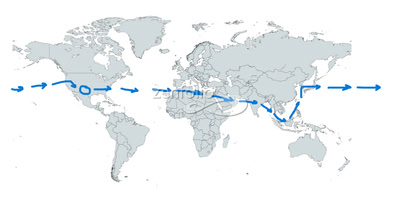
I also need to point out another salient event about this remarkable trip. Before leaving home, the Iran was had started that eventually resulted in airspace along our planned flights home to be closed. In anticipation that our Qatar Airways flight home through Doha would be canceled, we purchased a backup flight home on United Airlines in the opposite direction from the conflict. As a result, we actually traveled all the way around the world. We left Albuquerque going east to India, continued east to Singapore and Borneo, and with our backup flight continued further east to San Francisco, via South Korea, and back to Albuquerque. Wow, what an astonishing month April 2026 turned out to be.

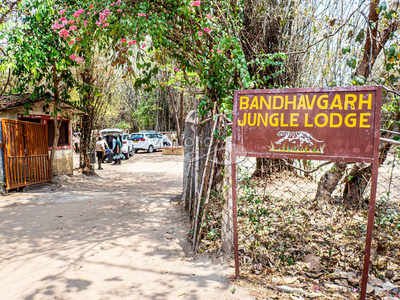
Our wildlife adventure began with the tiger safari at Bandhavgarh National Park in India. For a week we lodged at the Bandhavgarh Jungle Lodge and maid daily forays into the National Park scouting for tigers. Bandhavgarh is known for having a high density of Bengal tigers in its 380,000 acres of jungle terrain. However, tigers are well camouflaged, solitary and stealthy as they roan throughout their territory. Fortunately, thanks to our experienced guides, we were able to observe nine individual tigers with some great photo opportunities.
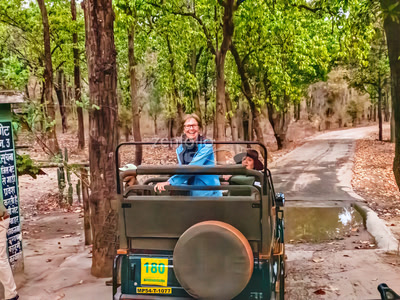
Bandhavgarh National Park offered many other wildlife experiences. A couple, that I refer to as “National Geographic” moments, stand out. First, we found an active jackal den where we observed the intimate behavior of adult jackals interacting with their brood of six very small pups. The other “National Geographic” moment involved watching several Oriental Honey-buzzard raptors approach and attack an immense beehive, hanging from a tree limb, to make off with large sections of honey comb.
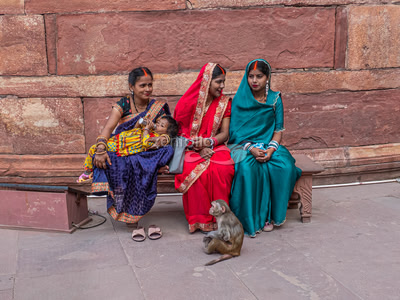
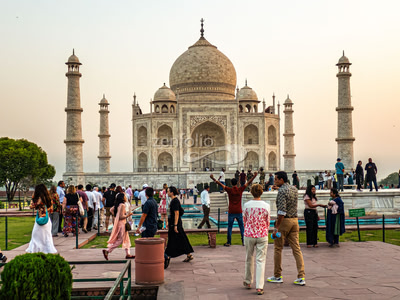
After our thrilling week-long tiger safari, we returned to Delhi where we had arranged for a two-day private tour to the city of Agra, home of the Taj Mahal. This domed, white marble mausoleum did not disappoint. Our guide made sure we experienced the beauty and tranquility of the Taj Mahal both at sunset and sunrise. A less tranquil experience was being driven through the discordant and haphazard traffic of urban and rural India. The less said about that the better.
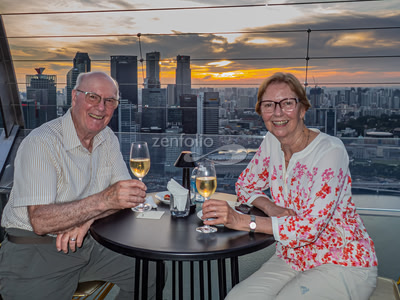
We left India for some well-deserved R&R (Rest & Relaxation) in Singapore before heading on to Borneo. Jan had made reservations at the Oakwood Premier Hotel at Raffles Place, a fifty-one-story high rise in the heart of Singapore’s financial district. The location was perfect for exploring many of Singapore’s urban attractions. And explore we did, with champagne atop the Marina Bay Sands Hotel, visits to various mosques and temples, and strolls though the Gardens by the Bay, the Supertree Grove, and the National Orchid Garden.

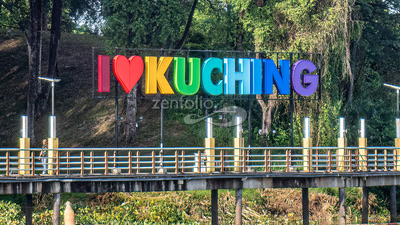
From Singapore we flew to Kuching in Malaysian Borneo where out Natural Habitat wildlife tour began. We arrived a day early and engaged a local guide for a walking tour of Kuching. Next day, we met the rest of our travel companions to start our adventure. The Borneo excursion, with four remote accommodations and two internal flights, was logistically more complicated that the tiger safari, where we stayed in just one lodge. Although we moved more during our twelve-day tour of Borneo, the remote rainforest lodges provided surprisingly modern suites and terrific food.
Wildlife photography on the Borneo expedition was extremely rewarding because much of the shooting was accomplished at special sanctuaries. The itinerary included stops at the Semenggoh Orangutan Center, Sepilok Orangutan Rehabilitation Center, Bornean Sun Bear Conservation Area, and the Labuk Bay Proboscis Monkey Sanctuary. In the wild, all these endangered animals are extremely difficult to find and photograph. The challenge, when photographing at a sanctuary, is to create photographic compositions that look natural. That turned out to be rather simple since the animals were cared for in very natural rainforest settings.
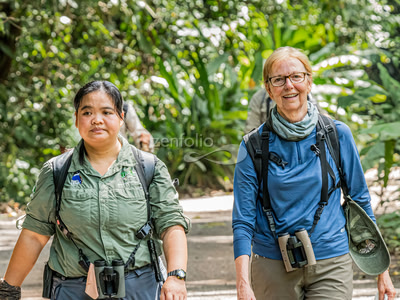
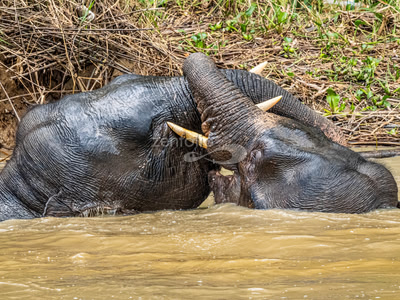
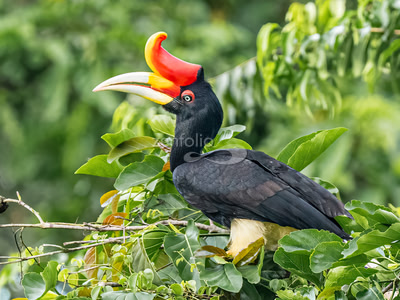
In addition to these unique Bornean species, other uncommon wildlife was encountered. We enjoyed observing young male Bornean pygmy elephants play fighting in the Kinabatangan River. The unusual rhinoceros hornbill bird proved to be frustratingly elusive until Bedley Asun, on of our guides, heard it call and found the bird perched with an unobstructed view. During our many guided treks into the rainforest, some strange critters were found including stick insects and the lantern bug with proboscis like snout.
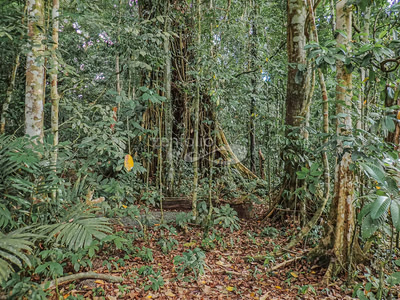
It's not possible for me the fully convey the distinctive aura of the rainforest jungle in this blog. Vegetation is dense, trees with huge angular buttresses are hundreds of feet tall, mist hangs in the high canopy, cicadas’ noisy calls penetrate the air, the atmosphere is laden with moisture and, with its location along the equator, the Bornean sun is intense. After only a few hundred feet of walking, clothing becomes saturated from humidity and sticks to the skin.
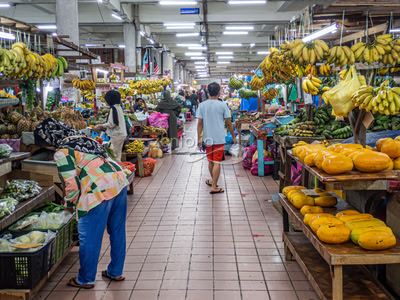
Our Bornean wildlife adventure ended in Kota Kinabalu from where we continued our eastward travel back to Albuquerque via Seoul and San Francisco. We did find time, however, to explore some Kota Kinabalu’s open air markets where a variety of spices, strange tropical fruit, and an array of fresh seafood was on display.

Starting with our flight from Albuquerque and counting all transfers and internal flights in India and Borneo, Jane and I had the distinction of traveling on thirteen different flights. The amazing thing is that there were absolutely no problems. All flights departed and arrived as scheduled and our luggage always appeared on the carousel. I have selected a few of my favorite images from the tiger and orangutan expeditions and placed them in the India and Borneo galleries for you to view. The photos are best viewed on a large screen like a laptop or computer monitor. I hope you enjoy the pictures.
2026 Update
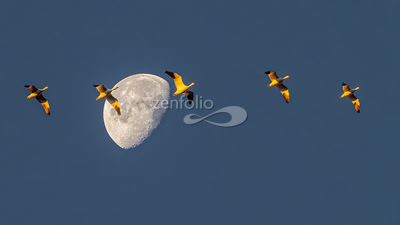
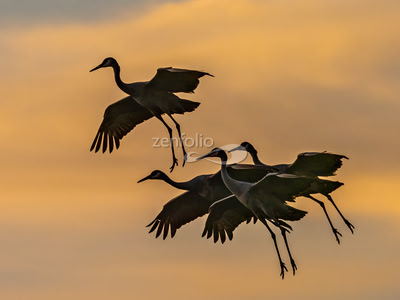
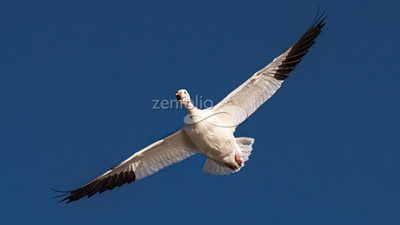
Before our next travel season begins in earnest, let me provide a short update of what has happened so for in 2026. After Jane and I returned from our polar bear adventure in the Churchill Wildlife Management Area, Manitoba, Canada, I got a call from Bruce, my photo buddy from San Diego. He was actually in Arizona attending a golf workshop and he called to suggest we spend a couple of days photographing at the Bosque del Apache Wildlife Refuge. And that is what we did. Of course, we had been there a number of times before, but we were anxious to get out to do some shooting.
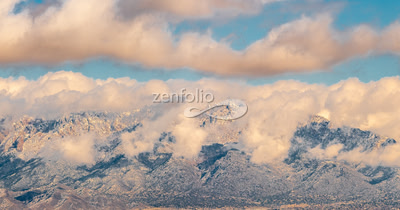
In February, Mother Nature finally favored Albuquerque with a dusting of snow. I had been waiting impatiently for snow so I could photograph the Sandia Mountains with a coating of white. In Albuquerque, however, you have to be quick to capture scenes with snow because, typically, the snow has evaporated by the afternoon. Things didn’t work out the way I had envisioned. After it stopped snowing, there were heavy storm clouds shrouding the mountain. I did get some “keeper” panoramic images of the clouds obscuring the Sandias.
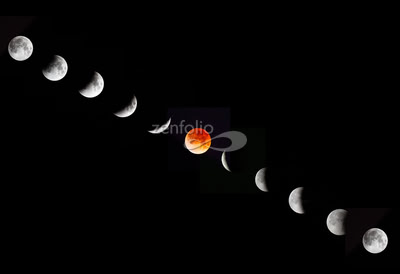
 Then on March 3rd, there was a total lunar eclipse that was visible from Albuquerque. I did my research and determined when and where I had to setup in order to capture the entire eclipse sequence. I got up at 2:00 AM, dressed warmly, got my gear, and hiked out the front door for less than a quarter mile to a small hill in the Petroglyph National Monument. From that vantage point I took pictures about every fifteen minutes from 2:30 AM till 6:00 AM to capture the eclipse, including the blood moon.
 Now, Jane and I are getting ready for our first 2026 adventure. We are hoping to add some exotic birds to our bird list and some never before photographed (be us) mammals. It should be an exiting trip and we will be packing soon. Check back in a month or so for a blog about this new venture of ours.
So Long 2025
When cottonwood leaves along the Rio Grande turn yellow it is a sure sign we are approaching the end of the year. The color change also triggers the need to close the year with a final Blog. Here’s what we have been up to since our trip to the Wichita Mountains Wildlife Refuge in September.
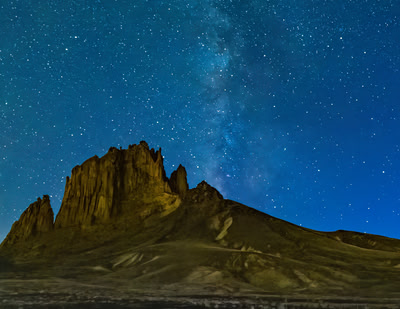
Let me start by saying that the U.S. Government shutdown resulted in some cancelled photo ops. Both the Valles Caldera National Preserve and the Salinas Pueblo Missions National Monument offered night sky photography opportunities that I had signed up for but were cancelled due to the shutdown. As an alternative, I arranged for a Milky Way photo shoot at Shiprock with Kialo Winter. Kialo is the owner of Navajo Tours USA and provides guided excursion into the San Juan Basin Badlands in northern New Mexico. That was in October and that late in the year the Milky Way is not at it’s brightest, but Jane and I had a good time experiencing the dark, night sky and the Milky Way rising above Shiprock.
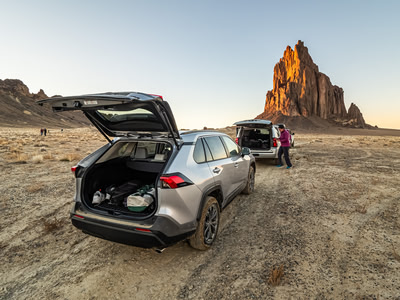
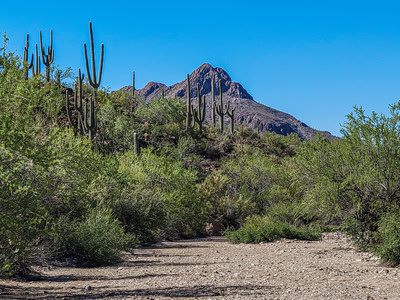
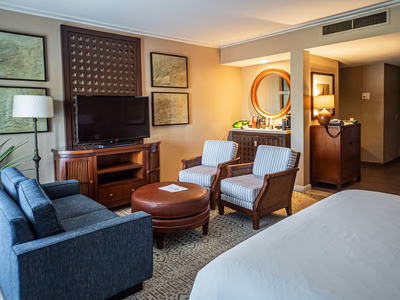
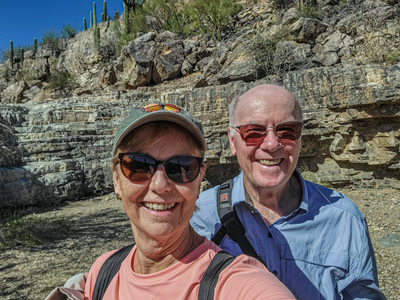
Our next trip requires a bit of explanation. For years now, I have been making coffee table books featuring my photographs. My current project is a coffee table book about the ancient rock art of the southwest. This new book highlights rock art of the Archaic, Hohokam, Mogollon, Ancestral Pueblo, and Fremont cultures that occupied the southwest in prehistoric times. I was lacking photographs of Hohokam rock art, so our next journey was a week-long exploration of Hohokam rock art sites in Arizona. As usual, Jane had selected very nice places for us to stay in Phoenix and Tucson. With such exceptional accommodations, the trip was almost a relaxing vacation, had it not been for the steep rocky trail we had to navigate to reach various rock art sites.
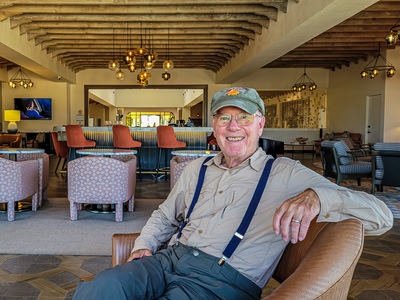
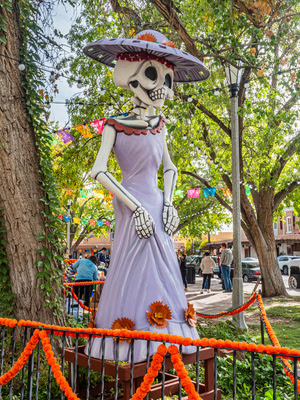
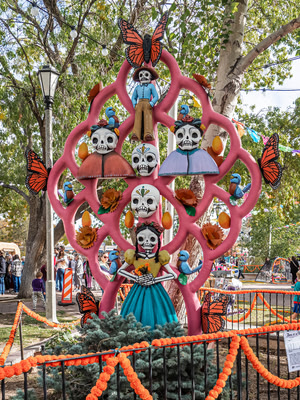
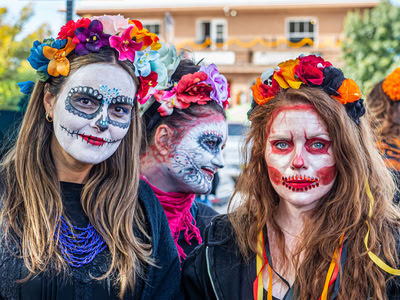
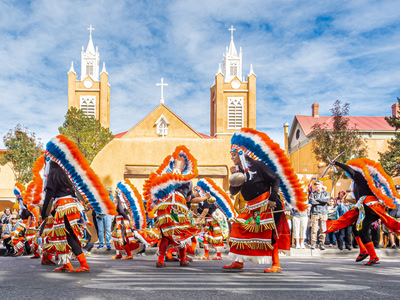
Dia de los Muertos (Day of the Dear) is a Mexican holiday that is celebrated by Hispanic people throughout the U.S. The event honors deceased family members and is highlighted with face painting. Jane and I ventured to Old Town Plaza, in Albuquerque, to join the celebration. In addition to the Day of the Dead celebration, there was also a dance group performing a traditional and historic Matachine dance honoring the Virgin of San Juan.
Then, to close our travel year, we made a journey to Churchill, Canada, to photograph polar bears. Churchill is the polar bear capitol of North America and we were not disappointed, spotting around 20 polar bears on each of out four days on the tundra. Four nights we lodged at the Tundra Lodge and four days we roamed the Churchill Wildlife Management Area and tundra buggies scouting for bears. The timing of our trip was fortuitous as ice had started to form on the edges of Hudson Bay and bears were active and energetic in the cold weather. We watched them rolling in the snow and play fighting as they anticipated returning to the sea ice on Hudson Bay to hunt seals.
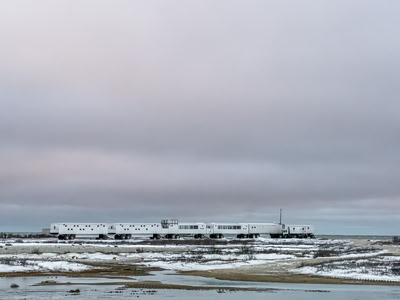
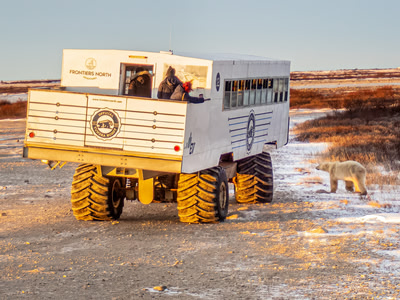
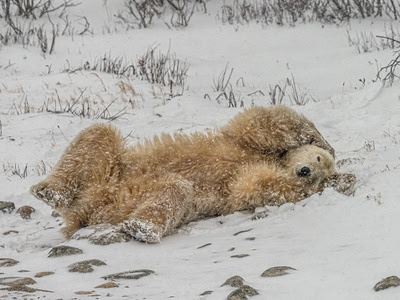
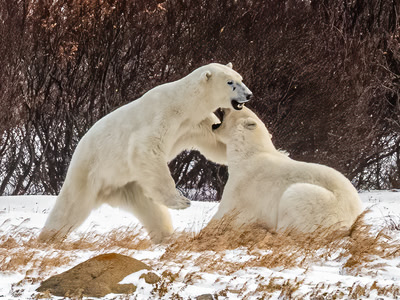
To see a collection of polar bear photos, go to the "Wildlife Refuges and Preserves" gallery and then find the "Churchill Wildlife Management Area" gallery.
Wichita Mountains National Refuge
As we reach the end of September, we can be assured that Autumn is on its way. Jane and I embarked on a short road trip in September to finish our summer travels before Autumn’s arrival. We headed due east from Albuquerque for eight hours to Lawton, Oklahoma, to visit the Wichita Mountains National Refuge. We knew very little about this refuge but figured there would be some wildlife viewing and photography. Turns out that this refuge, established in 1905, was the nations first preserve for big game. At the time, when the Oklahoma Territory was opened for homesteading, there was very little in the way of big game left. Buffalo hunters had all but wiped this animal from the American prairie.
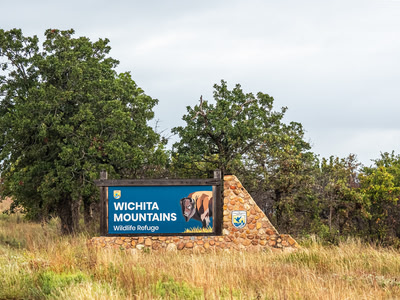
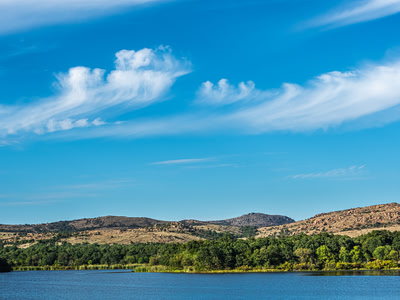
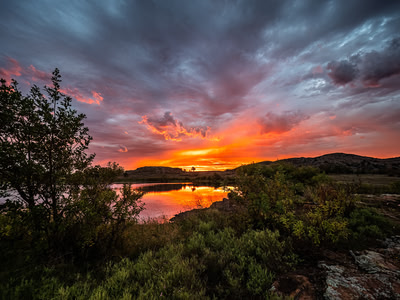
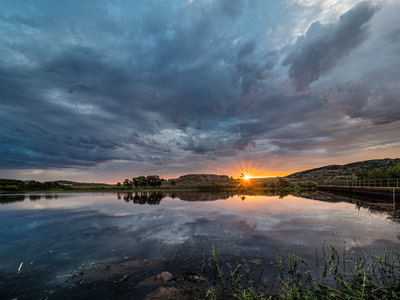
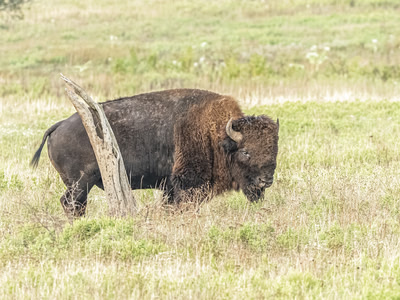
In 1907, it was Teddy Roosevelt who led the way to reintroduce bison to the refuge. Fifteen American Buffalo (bison) were brought by train, from the Bronx Zoo in New York City, to re-establish the iconic bison at the refuge. A year later, a small herd of Rocky Mountain Elk from Jackson Hole, Wyoming, were brought to the refuge. Then in 1927, in order to reflect the western heritage of the area, Texas Longhorn Cattle were also brought to the refuge. Wichita Mountain National Refuge now provides protection status to these unique animals.
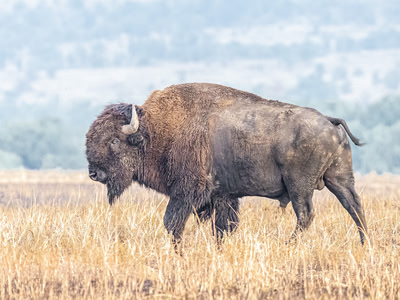
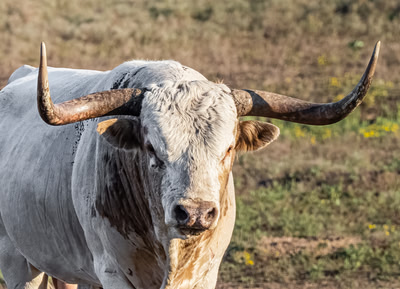
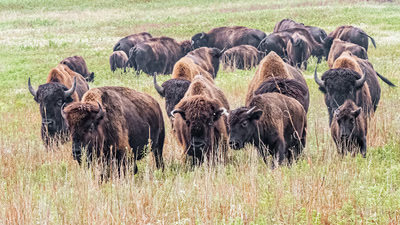
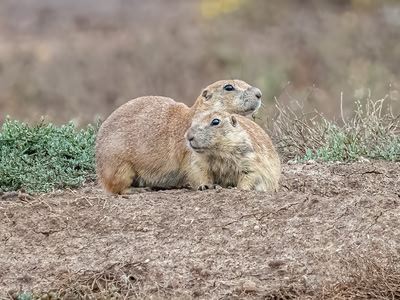
From a photography perspective, the most charismatic animal, the one I spent the most time watching and photographing, was the Black-Tailed Prairie Dog. This keystone species also had to be reintroduced into the refuge after the original population had died off due to disease. In 2023, thirty prairie dogs were relocated from Elmer Thomas Park, in Lawton, to establish a new colony at the refuge. I was certainly appreciative of that reintroduction because I spent hours trying for keeper images.
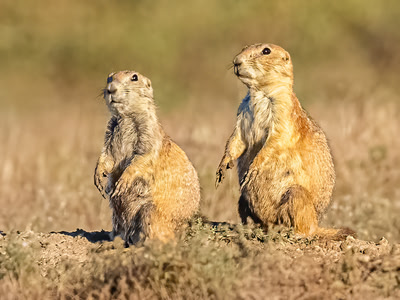
For images from Wichita Mountains National Refuge you check the "Latest" gallery and the "Wichita Mountains National Refuge" gallery under the "Wildlife Refuges and Preserves".
Now, as Summer fades into Autumn, Jane and I look forward to the rest of year and travels still to enjoy.
Summer 2025
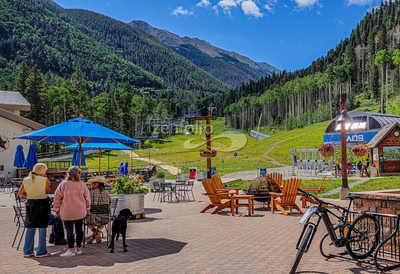
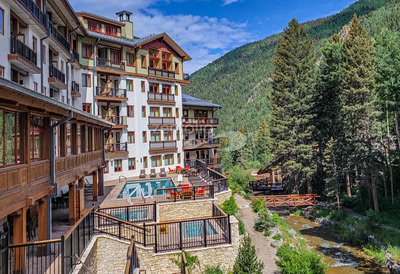
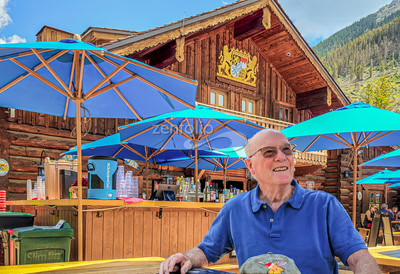
Summer is slowly drifting by. There has not been any exotic, foreign travel for us so far. In mid-July, Jane and I did spend a few days at the Blake Hotel in the Taos Ski Valley. That was a pleasant respite from the hot summer temperatures in Albuquerque. All-in-all, it was a fun little get away to the cool, high elevations of the Sangre de Crito Mountains of northern New Mexico. The Blake Hotel is an elegant, full service inn, with free valet parking. Named after Ernie Blake founder of the Taos Ski Valley resort in 1955, the hotel is reminiscent of alpine ski resorts.

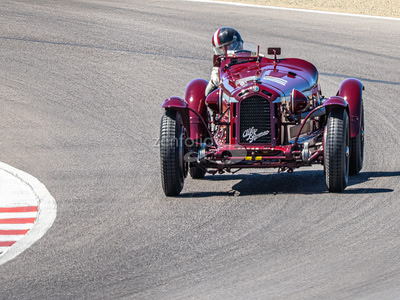
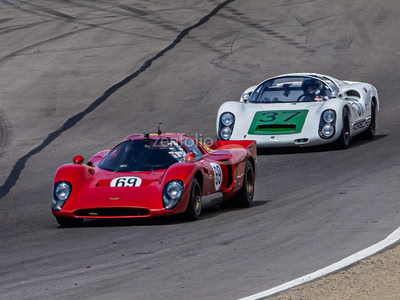
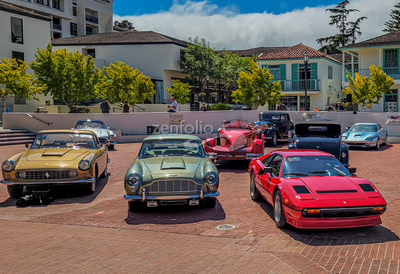
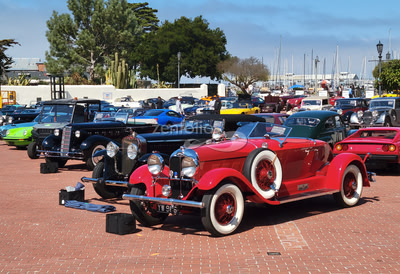
Then, in mid-August Jane and I embarked on a weeklong road trip to Monterey, California. The main purpose of this journey was to enjoy Monterey Car Week and the Rolex Monterey Motorsports Reunion. The highlight of our time in Monterey was going to the Lagune Seca Raceway to watch historic cars racing around the hilly road course tucked in the foothills east of Monterey. We watched old race cars from the 1930s, sport racers from the 1950s through 1970s, and open wheeled Formula 1 cars from the 60s, through 80s.

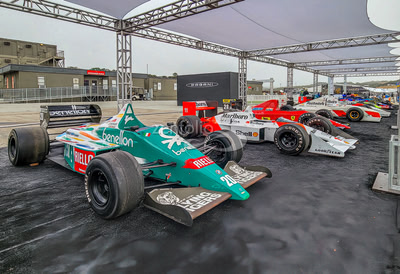
The theme of the 2025 Rolex Motorsports Reunion was to celebrate the 75th anniversary of Formula 1 racing. There were about 30 or more Formula 1 cars on display from various racing teams that have competed in the sport over the years. The 2024 “papaya” colored McClaren Formula 1 car driven last year by Lando Norris was on display as was last year’s Oracle Red Bull Racing Formula 1 car driven by Max Verstappen. That was a surprise treat for us since we have been watching Formula 1 racing on TV for a number of years and were familiar with many of the cars on display.


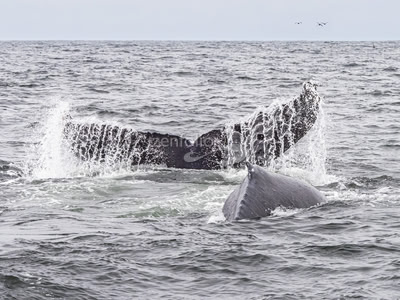
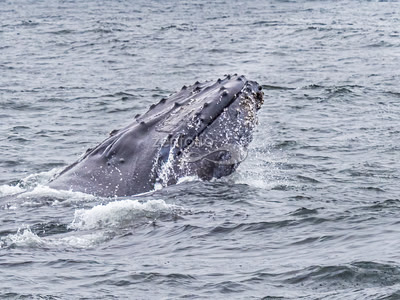
In addition to the historic car racing at Laguna Seca, I also took advantage of proximity to Monterey Bay for some whale photography. I went out twice with the hope of capturing whales breaching out of the water. That turned out to be disappointing. I did see a number of whales during my four hours on the bay, but was only able to photograph some tail flaps. So photographing a breaching whale is still on my bucket list.
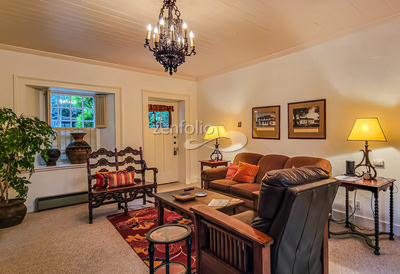
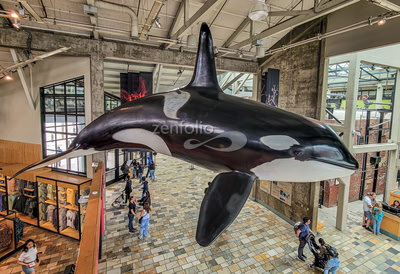
In Monterey we stayed at the boutique Merritt House Inn on Pacific Street close to car week activities. Jane had arranged for us to stay in one of their historic, 1830s, adobe suites with a large living room and separate bedroom. It was nice to have some room for our six-night stay. We were within walking distance of the Monterey Aquarium and spent some time there marveling at the size of their salt-water exhibits. We were also close to the Monterey conference center where one of the many classic car auctions was scheduled during Car Week. We marveled at the scores of exotic, historic cars slated for the auction block. There were pristine examples of Ferraris, Lamborghinis, Porches, Mercedes Benz 300 SL Gullwings, Aston-Martins and many other cars to drool over.


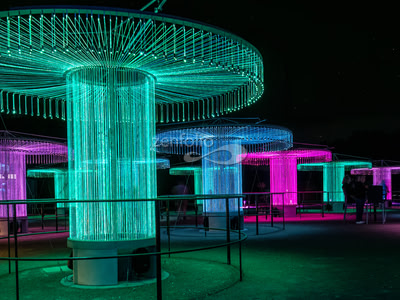
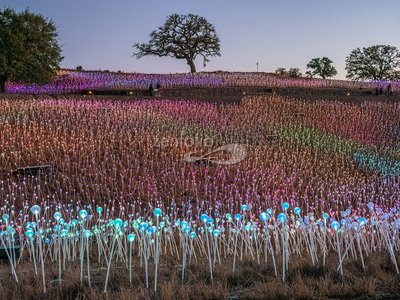
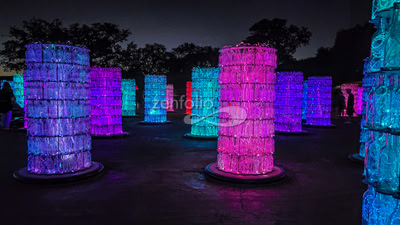
On our way home from Monterey we stopped overnight in Paso Robles to experience the Sensorio light show. After sunset, more than 100,000 lighted fiberoptic bulbs create fields of different colored lights. There were also scores of light towers made from 17,000 illuminated wine bottles and geometric light sculptures that changed color with the beat of accompanying music. Sensorio was an extraordinary experience, not one to be forgotten soon.
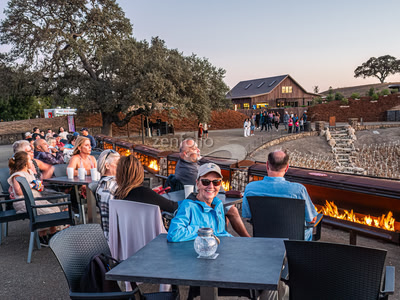
Now, back home in Albuquerque, it is still hot as we while away the rest of summer. We have no trips planned for the immediate future and will be enjoying home-life, with its mixture of dinners with friends, concerts in the park, happy hours with neighbors, and watching Formula 1 races on TV.
Short June Trip
In June, Bruce Hollingsworth, my San Diego photo-buddy, was to join me for some landscape photography. However, due to unforeseen circumstances, he could not make the nine day tour I had planned out. Since this journey included photo stops I had wanted to make for some time, I decided to shorten the June venture with Bruce, and go it alone.
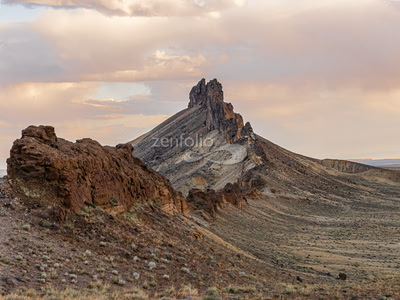
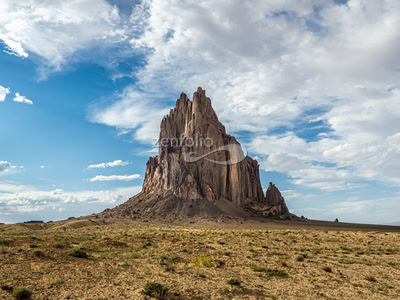
My first stop was to photograph Shiprock, in northwestern New Mexico. This iconic geologic formation is sacred to Navajo people and I used a local guide, Kialo Winters, to allow me to get up close to this volcanic neck. Geologists estimate that Shiprock was about 2,500 feet below the land surface at the time the volcano formed, some 30 million years ago. There are also vertical, wall-like lava dikes radiating from the volcanic neck that Kialo led me to.
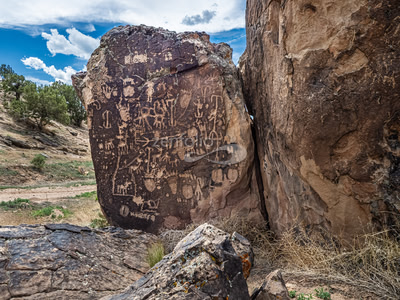
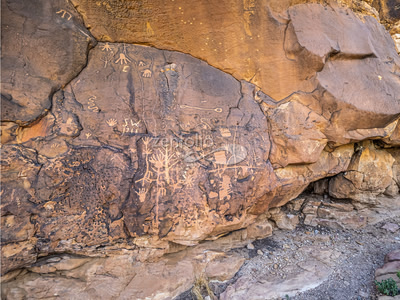
From Shiprock, I drove to Montrose, Colorado, to photograph Ute Indian petroglyphs in the Shavano Valley. The 45 acres where to main rock art panels are located is protected by a conservation easement and access is controlled with a locked gate. The Ute Indian Museum in Montrose has a list of docents authorized to lead private tours of the site. From the list, I randomly selected Russ Barr to guide me. That turned out to be a serendipitous choice because Russ turned out to be a great person to spend time with and also possessed extensive knowledge about the rock art.
I continued my solo photo trip from Montrose, Colorado, to Capulin Volcano National Monument in northeastern New Mexico. I have photographed many of New Mexico’s national monuments, but not this one. The location had not been on the original itinerary for the trip with Bruce, but since I was now alone, and had wanted to photograph Capulin Volcano for some time, that is where I headed next. To be frank, the volcano itself was not very photogenic. I was lucky, however, to have some dramatic storm clouds to enhance the view of the volcano.
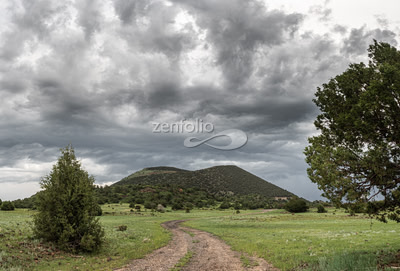
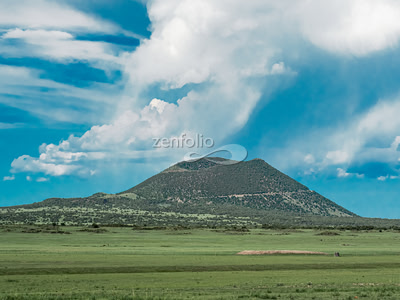
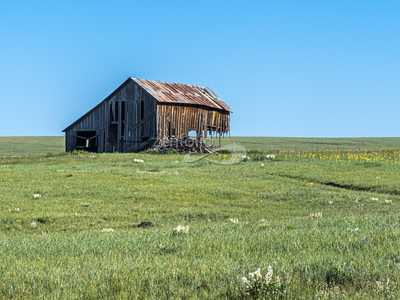
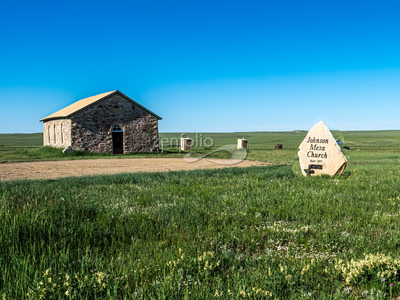
Capulin volcano lies within the vast Raton-Clayton Volcanic Field that was active some 9 million years ago. Capulin is unique in that it was formed only about 60,000 years ago, making it one of the youngest volcanos in New Mexico. Lava flows from the older, ancient volcanos created extensive lava capped mesas. New Mexico Highway 72 is the backcountry route to Capulin Volcano National Monument and crosses the lava capped Johnson Mesa. Only a few active ranches exist on this vast, flat grassy plateau. I photographed some of the abandoned barns and an old church, built in 1897, along this long, lonely route.
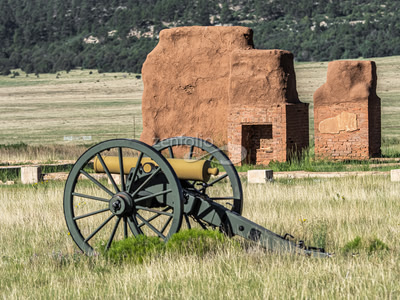
One my way back home on I-25 from Capulin Volcano, I made short stops at Fort Union National Monument and Pecos National Historic Park. Fort Union played an important role in protecting wagon trains on the Santa Fe trail and in defeating Confederate troops that had invaded New Mexico Territory from Texas.
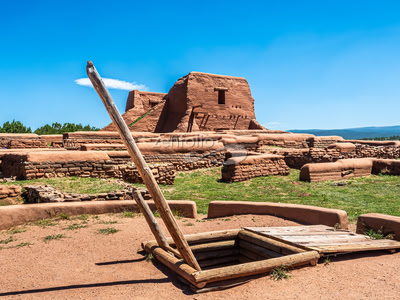
Pecos Pueblo was located along an ancient trading route between Plains Indians and Rio Grande pueblos. Prior to Spanish colonization, Pecos was a large and powerful pueblo with a population of some 2,000 people.
Whooping Cranes & More
It’s a dilemma knowing whether to share good news first or bad news first. I’ll start with the bad news first. After twenty years, Jane and I have lost a dependable and cherished friend. Yes, the 2004, four-wheel drive, Toyota 4Runner, with nearly 250,000 miles has gone. And here is the good news, the 4Runner was traded in for a brand new 2025 Toyota, all-wheel drive, Rav4 Hybrid. And, we just finished our first major road trip in the Rav4 to the Aransas National Wildlife Refuge near Rockport, Texas, to photograph whooping cranes.
Whooping cranes, endemic to North America, are among the most endangered birds in the world. Back in 1940, due to habitat loss and hunting, there were only 21 whooping cranes left in North America. Today, as a result of conservation efforts and captive breeding, the current wild population is estimated to be around 500 birds. The only naturally occurring, and self-sustaining, flock of Whooping Cranes breeds in Wood Buffalo National Park, in northern Alberta, Canada, and spends winters in Aransas National Wildlife Refuge in Texas.
You can understand that I would want a chance to photograph the endangered whooping crane. Besides its endangered status, the whooping crane is also the largest crane species, standing more than five tall with an eight-foot wingspan. It is a most impressive bird but also a difficult bird to find. Most of the wintering cranes forage for food among the coastal barrier islands of the Aransas National Wildlife Refuge. Searching for them involves motoring along the edges of the barrier islands in a boat and hoping you will spot cranes close enough to photograph.


We spent three mornings with Captain Kevin Sims on his boat, with two other photographers, searching for whooping cranes. There are thousands of acres of barrier islands where the 500 remaining cranes could hangout. So, we were very fortunate to find several family units of cranes within a reasonable distance for photography. When crane sightings became scarce, Captain Sims motored to a small rookery island with breeding great blue herons, reddish egrets, roseate spoonbills, great egrets, and Caspian terns. Of particular interest was the ability to photograph the distinctive white morph of the reddish egret.
After regaining our “land legs” and a satisfying lunch, we headed for a blind on Kevin Sims’ property where whooping cranes are often enticed to feed on corn. We four photographers spent hours in the blind waiting for cranes to arrive. Fortunately, cranes did show up, but they were sandhill cranes, the same crane I have photographed often at Bosque del Apache National Wildlife Refuge near home. Eventually, though, some whooping cranes did arrive and we could see the huge difference in size between the whooping crane and sandhill crane.
In addition to whooping crane photography, we also visited the El Potrero Nature Photography Ranch near Kingsville, Texas, an hour’s drive inland from Rockport. The Ranch has purpose-built photo sites with blinds to photograph regional birds. The variety of birds showing up at the photo sites was disappointing. Jane was able to add four new species of birds to her list, however. Perhaps the most interesting photo site was the one dedicated to attracting raptors where we had ample opportunity to photograph the Crested Caracara.


When all the photography was done, we packed up and headed for home, ending our first major road trip with the new Rav4, that now has a whopping 3,500 miles on the odometer. That means only one thing, more road trips to come.
For photos from our Whooping Cranes & More trip, check out the “Latest” gallery on the website.
2025 Is Here
Twenty-twenty-five has arrived, as well as another birthday, and the beginning of new, exciting travels. For starters, Jane and I rang in the new year at Santa Fe’s dazzling central plaza, ablaze with its thousands of colorful electric lights decorating the leafless trees. We were among hundreds of other revelers watching the last seconds of 2024 tick away on a large, electronic clock that was ascending up to a Zia Sun symbol representing the new year, 2025. There was boisterous cheering, enthusiastic well wishing, and intimate hugging and kissing as the clock reached its midnight zenith.


The excitement of Santa Fe was followed a month later with our first trip for the new year, a repeat February journey to Costa Rica. For this weeklong excursion, we had decided to stay at just one location, the Arenal Observatory Lodge the only accommodation inside Arenal Volcano National Park. This was our third trip to Costa Rica coordinated by Costa Rica Focus, a travel company specializing in organizing private bird watching and photography tours. It is so easy working with Costa Rica Focus. We tell them what we want to do and where we want to stay and they arrange airport transfers, lodging, meals, and guide services. Easy as pie!


The Arenal Observatory Lodge is a lovely place to stay. Jane and I had stayed there a couple of nights on a previous Costa Rica trip and decided that we would spend this entire trip at Arenal. The lodge is situated on 870 acres, of which nearly a third are primary (old growth) forest. There is a myriad of paved and dirt trails to explore and find birds to photograph. Finding the birds is the hard part and that is why having a birding guide from Costa Rica Focus is so valuable.


From previous trips to Costa Rica, I knew of some places I wanted to go back to. So, while staying at the Arenal Observatory Lodge, we made a couple of day trips to those locations. The first was the Catarata del Toro waterfall and the adjacent Blue Falls on a private reserve. Catarata del Toro is truly impressive with water from the Toro River cascading nearly 300 feet into an extinct volcanic crater. There is an easy, short trail with three viewpoints overlooking the falls. There is also a much longer, steeper trail down to the bottom of the falls that we did not attempt to navigate.

The trail to the Blue Falls, on the other hand, was not easy. Far from it. The ticket agent assured us that the path was fairly level for most of the three-quarter mile track. That was certainly not the case. The trail was pretty much all uphill with some rather steep ascends. Upon approaching the waterfall, the trail became narrow with lots of steep, wet steps descending down into the river gorge. We hiked down to only one of several Blue Falls. The water gets its robin-egg blue tint from an abundance of dissolved aluminum sulfate, of volcanic origin, that reflects blue from sunlight. The hike was a bit strenuous but worth the effort.


One of my recurring hopes for trips to Costa Rica is to photograph a sloth with a baby. So, our second day trip was to the Bogarin Trail near the bustling tourist town of La Fortuna. The trail is known for sloth sightings, and, we were informed that there was one with a baby. We started out very enthusiastically, only to learn that the sloth with baby had left the area. We did spot and photograph two other sloths. Photography was difficult due to the sloths being so high up in the canopy of the trees, hidden by branches and leaves, and backlit by a cloudless sky. Again, I was foiled in my attempt for a baby sloth shot. Obviously, a reason for a future return trip to Costa Rica.

To see images from this Costa Rica journey go to the “Latest” gallery and for bird images go the “Birds” gallery and then “Birds of Costa Rica”.
TWO SHORT WINTER TRIPS TO END 2024
The early December air was crisp and cold, with temperatures in the teens, as I walked out of the Gallup Holiday Inn Express to attend the 43rd annual Red Rock Balloon Rally. Frost had to be scraped off the 4Runner windshield before I could drive off for the morning Mass Ascension. Chemical warmers kept my toes and hands toasty warm as I listened to the pilot’s briefing. A clear sky with a gentle breeze was forecast as the pilots headed cheerfully to their balloons. The launch area at Red Rock State Park is divided into a north field and south field, separated by a camp ground. As the ground crews prepared their balloons for flight, I hustled between the launch areas to find the best photo locations.


Several dozen balloons, including a few special shapes, ascended into the calm sky against a backdrop of red sandstone bluffs. To the delight of spectators, some of the pilots were able to maneuver their balloons close to the bluffs and scrape their baskets against the red rock. The calm weather also allowed tethered balloons to be tightly spaced for a colorful, synchronized evening balloon glow.


Jane joined me for the second of my two year-end jaunts. We spend a day at Bosque del Apache enjoying unusually warm December weather at the National Wildlife Refuge. In order to catch sunrise with the sandhill cranes, we overnighted in Socorro rather than driving super early from Albuquerque. Driving around the south and north loop roads looking for cranes and other wildlife, with a baren, winter landscape, was very enjoyable. There were not a lot of birds, but the few that were there provided some fun photography. Perhaps the highlight of the excursion was seeing a mom javelina with a very young infant trotting behind.


With these two short year-end trips completed, Jane and I are now getting ready for the many social event planned with our neighbors to celebrate the holidays. For New Year’s, however, it will be just to two of us in Santa Fe to ring in the new year.
Autumn Road Trip
Autumn has arrived and we are heading for the end of the year. This is my last blog for 2024 and it is all about a road trip to our timeshare cabin in Montana, that I endearingly refer to as “our place in Montana”. It’s a long way to “our place in Montana” so we typically break the drive up with a number of stops along the way. This year was no exception.
We started out with a short drive to Chama, New Mexico, a bit north of Santa Fe. There we enjoyed a day-long adventure on the historic Cumbres & Toltec narrow gage railroad. The Cumbres & Toltec Scenic Railroad is America’s longest and highest narrow gage railroad and is designated a National Historic Landmark. We left Albuquerque early in the morning for the three hour drive to Chama to catch the ten o’clock train for the 64 mile journey to Antonito, Colorado. The 1880 era, coal burning, steam Engine 484 pulled our restored Denver & Rio Grande carriages along the tight turns over the mountains from New Mexico to Colorado. Jane had booked us in the Parlor Car where we marveled at the turns and twists of the narrow gage tracks and enjoyed mimosas while watching the scenery pass by. The historic train journey ended at Antonito where busses were waiting to transport us back to Chama.


After spending the night in Chama, we continued our road trip to Chimney Rock National Monument in Colorado, about an hour’s drive northeast of Chama. The name suggests that this national monument is all about the outstanding geologic rock formation. But that would be wrong. Actually, this national monument is a one thousand year old archaeological site consisting of ancient dwellings, kivas and a great-house pueblo. Archaeologists believe that the people who lived here a thousand years ago were part of the Chaco culture who inhabited Chaco Canyon in New Mexico. Jane and I hiked the steep Great House Trail to view the ruins.


From Chimney Rock, we drove a short distance to Arboles, Colorado, situated near the north end of Navajo Reservoir. Arboles is a small, unincorporated community, with an estimated population of around 300 people. Two of those people are my nephew Mike Riebeek and his wife Aneda. I had not seen Mike for many years and had never been to his home in Arboles. We had a great, although short, visit with Mike and Aneda sharing stories and talking family stuff.
After bidding Mike and Aneda adieu, we headed further north on U.S. Highway 550 to Montrose, Colorado. The goal there was to spend a few days photographing at the Black Canyon of the Gunnison National Park. The canyon was not easy to photograph. When the sun was low on the horizon, one side or the other of the extremely deep and narrow canyon would be in shade. When the sun moved higher into the sky, the bottom of the canyon would have sunlight, but both sides of the steep canyon walls would be shady. We hiked to most of the view points on both the South Rim and North Rim roads. The most spectacular views were from Exclamation Point on the north side of the canyon. From Exclamation Point we had several clear views up the canyon. We thoroughly enjoyed the three mile, round-trip, hike to Exclamation Point. The trail was relatively flat and traversed through pinyon- juniper woodland and the cool morning air was invigorating.


When arriving at Montrose, Jane noticed the Ute Indian Museum along the highway and we decided to make time for a visit there. As the name suggests, the exhibits at the museum were all about the indigenous Ute tribes of the Great Basin and Colorado Plateau. Ute history, during the “westward expansion” of the 1800’s, parallels New Mexico’s Navajo and Apache history with their confinement to reservations. In addition to providing insight into this sad history, the museum also provides contemporary programs highlighting Ute tribal activities.
 From Montrose, Colorado, we continued are journey to “our place in Montana” with overnight stops in Casper, Wyoming and Great Falls, Montana. In Casper, of all places, we discovered the National Historic Trails Interpretive Center located in a very avant-garde facility near our hotel. This impressive interpretive center highlights the “westward expansion” from the pioneer’s perspective. Exhibits documented westward migration along the Oregon Trail, California Trail, Mormon Trail and the Pony Express. So, Jane and I were exposed to the history of the west from two opposing viewpoints.


Since our stay at the timeshare cabin is two weeks long, it is not unusual for us to take a short overnighter to some nearby attraction. This year we opted to visit the Writing-on-Stone Provincial Park in the Milk River valley near Lethbridge, Alberta, Canada. The park contains petroglyphs created by nomadic Blackfoot tribes of the Great Plains. The area is sacred to current Blackfoot tribal members and has been designated a UNESCO World Heritage Site. Our guide for the petroglyph tour was a Blackfoot and he had wonderful stories to tell about the rock art and his personal experiences.


On the way to and from the Writing-on-Stone Provincial Park, we sidetracked to Waterton Lakes National Park in Canada. Waterton National Park shares its southern, international, border with Glacier National Park’s northern, international, border. Together these two parks make up the Waterton-Glacier International Peace Park: World Heritage Site. We detoured to Waterton National Park in order to have lunch at the historic Prince of Wales Hotel. Built in 1927, the Prince of Wales hotel is reminiscent of the great railroad hotels built in America’s western national parks.


We enjoyed our brief foray into Canada. The drive along Chief Mountain Highway, in the eastern foothills of the Rocky Mountains, is always a stunning ride especially when the hills are adorned with fall colors. Eventually, though, the time came to head back south to New Mexico. It’s a long way from Albuquerque to our cabin, about 3,500 miles round trip, including visits to Writing-on-Stone and the Prince of Wales hotel. Jane had downloaded an Audible book on her phone and we listened to Anthony Horowitz’s novel Moonflower Murders (a PBS Masterpiece series). At each stop along the way we would try to figure out who the culprit was, but we never did.
 We stopped in Logan, Utah, to visit with my sister, Neli, and my nephew, Bryan, and his wife, Margaret. Neli is now a young 97 years old and still doing very well, thank you. She needs a “walker” to get around but is pretty sharp and delighted in sharing stories with us. Bryan had arranged for the five of us to have lunch at Cody’s Gastro Garage, an actual auto repair garage turned into a trendy café, in Garden City along the west shore of Bear Lake. It was a special treat for me to spend some fun time with my sister.
 The next day, Jane and I headed home to Albuquerque. We arrived back in time for the 52nd annual Albuquerque International Balloon Fiesta. Normally, we don’t get back to Albuquerque from our cabin in time for the Balloon Fiesta. So, this year we were able to go out early a couple of mornings to watch the balloons launch into the air. The weather in Albuquerque was particularly favorable for the event this year and there were balloons in the air most every day during the nine-day Fiesta. We were fascinated by the special-shape balloons with their unusual, often whimsical, designs.
Autumn has arrived and a new year will soon be upon us. We have started some early thinking and planning for trips in 2025. So, stay in touch to see what we will be up to next year.