April 2026

Over the years, Jane and I have experienced many extraordinary wildlife trips, but April 2026 stands out as the apex of our wildlife adventures. This amazing venture started when we committed to joining a Van Os Photography Safari to India to photograph one the world’s largest wild cats, the Bengal Tiger. Then, serendipitously, we discovered that Natural Habitat Adventures had an expedition to photograph orangutans, the world’s largest arboreal mammal, in Borneo. So, we decided to join both groups and spend the time between these excursions, about a week, in Singapore. When we put the logistical details on a calendar, it turned out to be a long month of travel from March 30th through May 2nd making April 2026 a month long to be remembered.
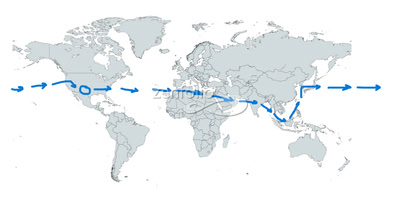
I also need to point out another salient event about this remarkable trip. Before leaving home, the Iran was had started that eventually resulted in airspace along our planned flights home to be closed. In anticipation that our Qatar Airways flight home through Doha would be canceled, we purchased a backup flight home on United Airlines in the opposite direction from the conflict. As a result, we actually traveled all the way around the world. We left Albuquerque going east to India, continued east to Singapore and Borneo, and with our backup flight continued further east to San Francisco, via South Korea, and back to Albuquerque. Wow, what an astonishing month April 2026 turned out to be.

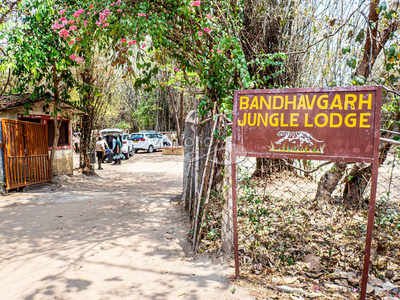
Our wildlife adventure began with the tiger safari at Bandhavgarh National Park in India. For a week we lodged at the Bandhavgarh Jungle Lodge and maid daily forays into the National Park scouting for tigers. Bandhavgarh is known for having a high density of Bengal tigers in its 380,000 acres of jungle terrain. However, tigers are well camouflaged, solitary and stealthy as they roan throughout their territory. Fortunately, thanks to our experienced guides, we were able to observe nine individual tigers with some great photo opportunities.
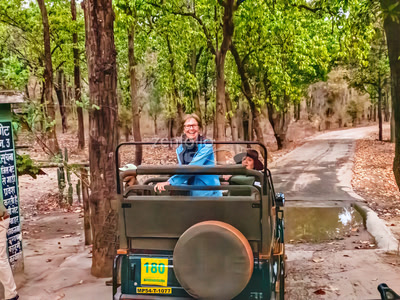
Bandhavgarh National Park offered many other wildlife experiences. A couple, that I refer to as “National Geographic” moments, stand out. First, we found an active jackal den where we observed the intimate behavior of adult jackals interacting with their brood of six very small pups. The other “National Geographic” moment involved watching several Oriental Honey-buzzard raptors approach and attack an immense beehive, hanging from a tree limb, to make off with large sections of honey comb.
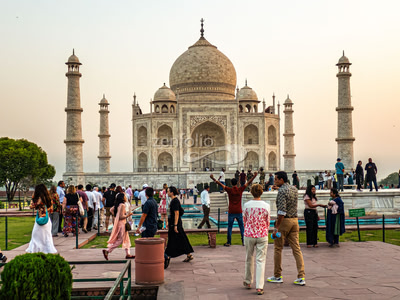
After our thrilling week-long tiger safari, we returned to Delhi where we had arranged for a two-day private tour to the city of Agra, home of the Taj Mahal. This domed, white marble mausoleum did not disappoint. Our guide made sure we experienced the beauty and tranquility of the Taj Mahal both at sunset and sunrise. A less tranquil experience was being driven through the discordant and haphazard traffic of urban and rural India. The less said about that the better.
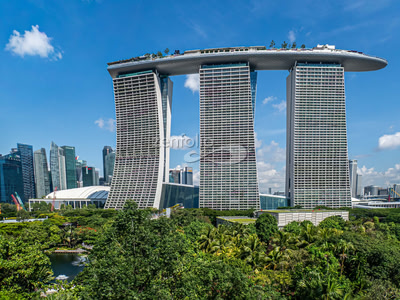
We left India for some well-deserved R&R (Rest & Relaxation) in Singapore before heading on to Borneo. Jan had made reservations at the Oakwood Premier Hotel at Raffles Place, a fifty-one-story high rise in the heart of Singapore’s financial district. The location was perfect for exploring many of Singapore’s urban attractions. And explore we did, with champagne atop the Marina Bay Sands Hotel, visits to various mosques and temples, and strolls though the Gardens by the Bay, the Supertree Grove, and the National Orchid Garden.

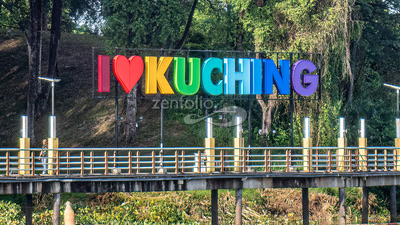
From Singapore we flew to Kuching in Malaysian Borneo where out Natural Habitat wildlife tour began. We arrived a day early and engaged a local guide for a walking tour of Kuching. Next day, we met the rest of our travel companions to start our adventure. The Borneo excursion, with four remote accommodations and two internal flights, was logistically more complicated that the tiger safari, where we stayed in just one lodge. Although we moved more during our twelve-day tour of Borneo, the remote rainforest lodges provided surprisingly modern suites and terrific food.
Wildlife photography on the Borneo expedition was extremely rewarding because much of the shooting was accomplished at special sanctuaries. The itinerary included stops at the Semenggoh Orangutan Center, Sepilok Orangutan Rehabilitation Center, Bornean Sun Bear Conservation Area, and the Labuk Bay Proboscis Monkey Sanctuary. In the wild, all these endangered animals are extremely difficult to find and photograph. The challenge, when photographing at a sanctuary, is to create photographic compositions that look natural. That turned out to be rather simple since the animals were cared for in very natural rainforest settings.
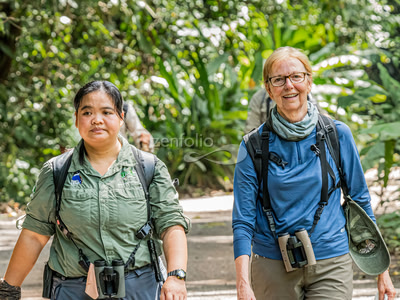
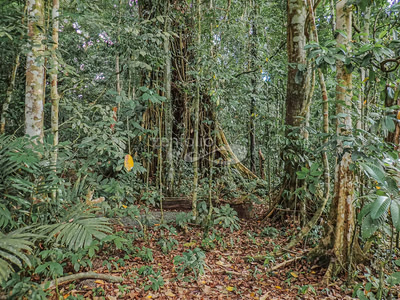
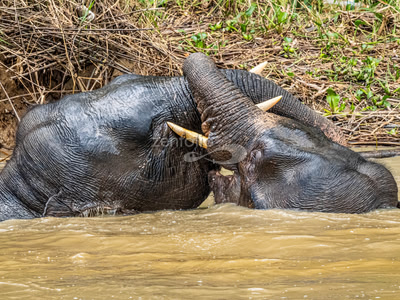
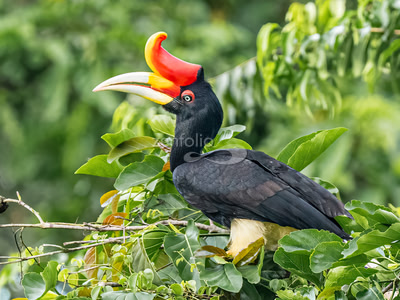
In addition to these unique Bornean species, other uncommon wildlife was encountered. We enjoyed observing young male Bornean pygmy elephants play fighting in the Kinabatangan River. The unusual rhinoceros hornbill bird proved to be frustratingly elusive until Bedley Asun, on of our guides, heard it call and found the bird perched with an unobstructed view. During our many guided treks into the rainforest, some strange critters were found including stick insects and the lantern bug with proboscis like snout.
It's not possible for me the fully convey the distinctive aura of the rainforest jungle in this blog. Vegetation is dense, trees with huge angular buttresses are hundreds of feet tall, mist hangs in the high canopy, cicadas’ noisy calls penetrate the air, the atmosphere is laden with moisture and, with its location along the equator, the Bornean sun is intense. After only a few hundred feet of walking, clothing becomes saturated from humidity and sticks to the skin.
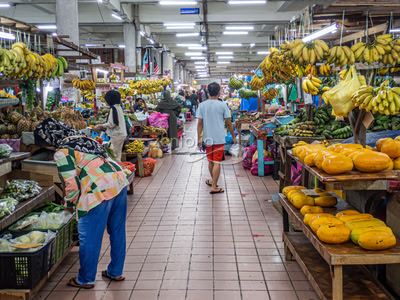
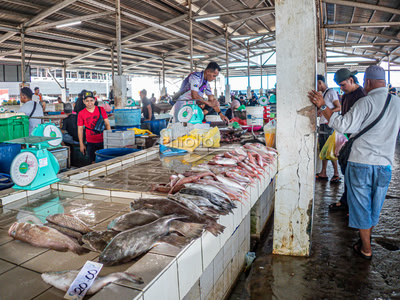
Our Bornean wildlife adventure ended in Kota Kinabalu from where we continued our eastward travel back to Albuquerque via Seoul and San Francisco. We did find time, however, to explore some Kota Kinabalu’s open air markets where a variety of spices, strange tropical fruit, and an array of fresh seafood was on display.
Starting with our flight from Albuquerque and counting all transfers and internal flights in India and Borneo, Jane and I had the distinction of traveling on thirteen different flights. The amazing thing is that there were absolutely no problems. All flights departed and arrived as scheduled and our luggage always appeared on the carousel. I have selected a few of my favorite images from the tiger and orangutan expeditions and placed them in the India and Borneo galleries for you to view. The photos are best viewed on a large screen like a laptop or computer monitor. I hope you enjoy the pictures.